July 9, 2013

Rise With The Son

My son is an early riser. He has been since the day he was born, nearly nine years ago. And every day since then I have cringed that he’s an early riser. That is, until today.

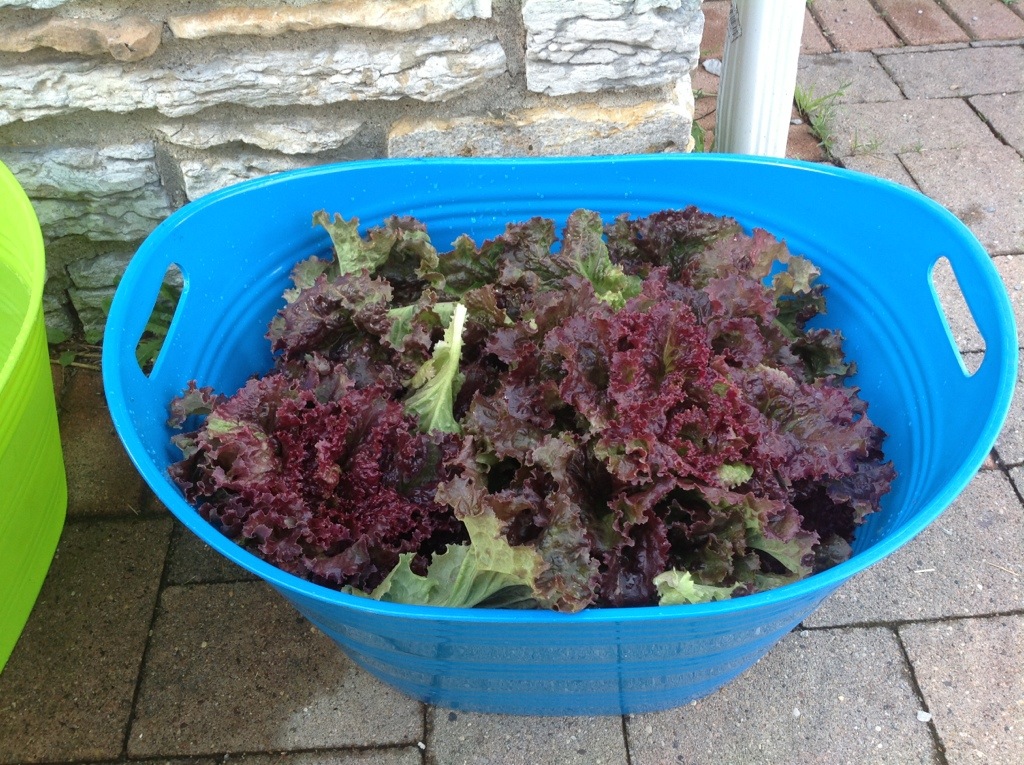
You see, today we started harvesting from our little farm in the city, the little urban farm, the front yard garden, the straw bale garden. But today we did it a little too late. We got out there late in the morning, after the rain stopped, and harvested salad greens and kohlrabi. Then we started “processing” our greens; harvest, cool, triple wash, dry, weigh, bag and cool. Along the way we did a little sampling. We were disappointed to find some of our greens were bitter. This can happen for a few reasons: the greens got too big, they are not heat tolerant varieties (ours are) or they were harvested too late in the day. So we sorted through our greens, figured out which ones were still sweet and which went bitter. Although we got a nice harvest, we composted an unfortunate amount of bitter greens and decided that tomorrow we’re starting earlier, before the sap in the lettuce goes bitter from the heat.
20130709-224445.jpg

I can’t tell you how many days since starting this adventure in January, that I’ve gained so much respect for the farmers who grow and supply us with food every day. They rise with the sun, go to bed with the sun and work every hour in between. We’re trying to plan a little road trip this summer and it’s stressing me out. I can’t stop thinking that I might be gone when my harvest will be at it’s peak. And if spring had been “normal” I would be closer to my original harvest schedule, but it wasn’t normal and having put all of this time and energy into the garden this year, I want to minimize as much loss as possible. And… assuming I’ll be able to sell some of the produce, it would be a shame to miss that opportunity as well. This experience has made me realize just how connected to the land farmers really are. They are caring for our food from the day the seed hits the soil until the day the crop comes out of the ground. They know when it is too early to harvest, too late and when it is just right. It has also reminded me why school starts when it does in the fall and ends when it does in the spring. It has made me realize that when you are growing a garden for your family it doesn’t matter so much when your crops hit peak harvest, but if you are growing for others, or for your livelihood, it does. This experience has made me wonder if I will still want to do this again next year when I get to the end of this season (I’m pretty sure I will). And it’s made me realize that food really isn’t all that expensive when you realize the time in planning, planting, tending, watering, harvesting and proper handling that goes into it. Are those fresh greens or those tomatoes worth the money they are asking for them? Um, yes. And probably more!

20130709-224630.jpg

It’s funny, when you begin to walk a day in someone else’s shoes, you begin to gain perspective into their life and have a different appreciation for who they are and what they do. Somehow, we become a little more connected, even if it’s just a better understanding of each other.

20130709-224815.jpg

Before I go to bed tonight I will say a little prayer, thanking all of the farmers for the food they have grown that has nourished me for so many years when I was too busy worrying about other things to stop and genuinely thank them for what they do.

And then, tomorrow, I will rise with my son and we will begin to harvest again.

Kate

June 25, 2013

Dripping Springs Ollas

20130625-071309.jpg

The attached chart shows approximate coverage and depth for the Ollas I am using in the 4×4 raised bed on the Urban Farm this year.

Dripping Springs Ollas site has a where to buy section if you are interested in trying them.

Kate

June 18, 2013

Urban Farm Update

Back in April I introduced you to my bare front yard and the beginning of my urban farm.

Quite a bit of time has passed since then and there’s been a lot going on, so let’s see how far we’ve come, shall we?

As I was waiting for spring to come and mulling over the possibilities of the design and method of starting my farm, I attended Joel Karsten’s seminar on Straw Bale Gardens and bought his book.  That led to a few phone calls, which lead to this.

20130617-235045.jpg

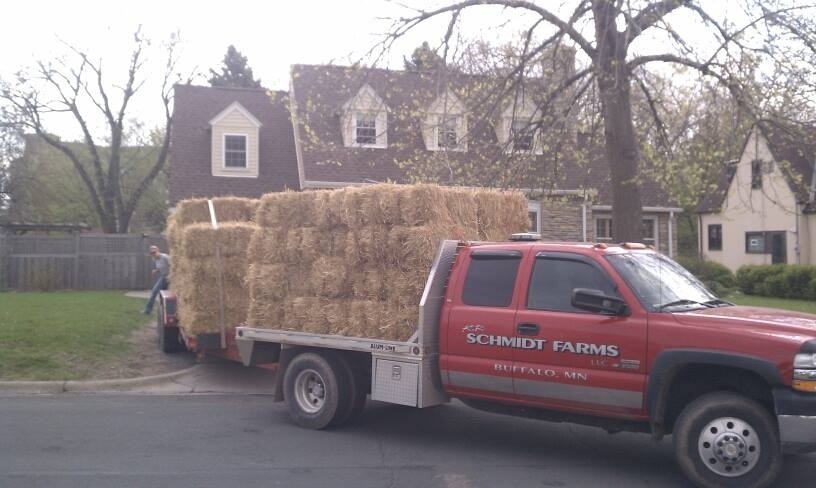
Eighty five straw bales getting delivered to my home.  No, I didn’t plant all 85.  I ordered extra for some of my friends and family that are “doing the bales” as well.  I’m only using 40.

But before ordering the straw bales, I had to make a final decision on which design I was going to go with.  After toying with a few ideas I decided that I really liked one of the keyhole garden designs from the book Gaia’s Garden by Toby Hemenway, which looks like this.

20130617-235251.jpg

I modified it a little to work with straw bales, add a couple of openings for access both for logistical and community purposes and ended up with this.

20130617-235426.jpg

It’s a little geometric with the bales, but part of my long-term plan is to turn at least some of the straw bales into traditional keyhole beds. At that point the overall design will begin to look more like the design from Gaia’s Garden, which is a modified mandala garden.  Another thing I’m trying to achieve with this garden is to make it partially a perennial, edible food forest garden and partially an annual food garden.  In addition to planting the straw bales, I am adding fruiting shrubs as well as annual and perennial food and flowers for both pollination and for attracting beneficial insects in the areas between four of the horseshoe-shaped beds.

You would think that would be enough to keep me busy this summer, but having a little bug for trying new things, I also decided to add a four-foot raised bed from Organic Bob.  You see, part of my plan for this space is to make it a learning space and I wanted to include a learning space specifically for children.  Turns out this raised bed was the perfect solution for that.  And not to go on about the bed itself, but one of the things that makes this bed unique is that you can plant in the sides as well as the top, and orientated the right way, you can take advantage of the sun and shade, planting heat-loving plants on the South side and those preferring it a little cooler on the North side.  Nothing like playing with your food before it even hits your plate!

20130618-000157.jpg

In the above picture, you will find two clay circles sticking out of the soil. Those are Ollas. Ollas are unglazed clay vessels that you “plant” into the soil when you are planting the rest of your garden.  The vessel gets filled with water which gradually seeps out into the surrounding soil both benefiting the plants by encouraging deep roots, making them less susceptible to drought and minimizing surface watering, thus cutting down on nutrient loss as well.  From what I understand, the only drawback in our climate is that they need to be dug up in the fall because if they are left in the ground over the winter they will crack.  I’m pretty excited about them because they can be used in every climate, probably even more effective or beneficial in hotter climates, which is where, if I’m not mistaken, they were originally developed.

66807530_scaled_144x192

This is what my Ollas look like, but they come in a variety of shapes and sizes.  I got mine here, but they can be found in other areas and there are DIY methods of making them from clay pots as well.

Well, I think that covers the highlights of what’s going on with my little farm in the city.

Until next time, enjoy the sunshine and envision an abundant season!

Kate

May 1, 2013

Observation – The Best Gardening Tool and Permaculture Principle 1

After a little stretch of nice weather (upper 70s) in the Twin Cities, snow and Winter Storm Warnings are again in the forecast, so let’s get back to the alphabet, shall we?

a-to-z-letters-o

We were all born with two of the best garden tools ever.  No, not our hands.  Our eyes.  Although it might make for quick work to have strong hands, it is our eyes that will provide us with the most benefit in the garden.

If you’ve ever wondered why those old ladies and old men seem to have the most amazing gardens, it’s all the years of  observation.  Sure, they know what to do, they’ve been doing it for years.  But there really is only one way to plant a seed or plant a plant… bottom down, top up.  Observation teaches us everything else.  Observing means learning what works and what doesn’t.  Paying attention to where the water goes when it rains.  Paying attention to where the winds come from in the summer and in the winter and what it does to our landscape?  Do we get snow drifts in the same spot all of the time? It means learning where we have micro-climates in our yard so we can select the best place for our favorite plants.

Observation means paying attention to the natural traffic flow in our yards (both animal and human) and knowing that changing that flow will affect other areas.  It’s choosing when to make change and knowing when to leave well enough alone because attempting to do otherwise would only make us crazy.

Observation means paying attention to our soil.  It means knowing how well it drains or holds water. It means knowing where we have low spots that puddle and high spots that dry out.  It means learning from that and choosing the best plants for those locations.  It means knowing when our soil needs “a little something” and getting it there.

Observation means looking to the existing trees, shrubs, plants and even weeds to determine what might grow well with them.

It means noticing when we only have a couple of pests on our plants so we can implement our pest management plan vs waiting until we have a full infestation and wondering what went wrong.

Observation means knowing what is happening in your own back yard.  Who shares your space?  The neighbor’s cat?  How about deer?  Rabbits?  It’s about learning their paths, their habits so you know where to distract or divert them if you don’t want them in that part of your yard.

Observation means knowing yourself and your family.  It means knowing which parts of your yard you frequent (great place for a kitchen garden or herbs) and which places you rarely visit (maybe a place for a nut-tree or two).  It means knowing where your kids play ball (not a good place for Grandma’s delicate cutting flowers) and where they like to dig (maybe add a children’s garden or a fairy garden).

Observation is so important that is the first principle in the Permaculture Design System.  Permaculture, for those who may not know what it is, is a design system developed in the 1970s by Bill Mollison and David Holmgren. The Permaculture Design System is based on three ethics (Earth Care, People Care and Fair Share) and twelve design principles.

Principle 1: Observe & interact

The other day, I begrudgingly cleaned up the winter mess from our two dogs.  Let me tell you, given too much time on my hands I started calculating how many piles of poo that was.  Trust me, you don’t want to know the answer!  In any case, even though I was in the midst of a less than appetizing job, it did give me a few hours to observe my yard, something that doesn’t happen very often.  As I slowly worked my way around, searching for poo, I was able to see how everything survived the winter, notice where the lawn and soil look like they could use a little compost and seed, and I took note of changes I wanted to make.  My poo duty led to nice new paths giving better access around the veggie gardens and within the raspberry patches.  It lead to moving the compost bin because while it worked in its current location for a number of years, it is now in the way with the addition of the chicken coop.  I planned out (in my head) where I will change the grade slightly to capture water for the new raspberry patch before it runs out under the fence and into the neighbor’s yard.  I planned additional trees and shrubs around the perimeter, minimizing mowing in spaces nobody travels to and I realized that one of the apple trees is on enough of a slope that it probably isn’t retaining the water it needs and that again, with a little movement of soil I could change that process.

Observe and interact means taking note of what is in place and looking for guidance from nature to tell us how to interact appropriately.

Again, our eyes are, by far, the best gardening tool we have.  But we have to take the time to actually observe.  The soil and plants and animals around us will continue on their paths, it’s up to us whether we take the time to watch and learn.

Kate