July 28, 2013

Cover Thy Buds

Another cool night is forecasted for the Twin Cities, lows are to hit 52 degrees tomorrow around 6:00 a.m.

Grab some plastic or (row) covers and pull them up over your plants. Just like last night, if you live in the Twin Cities you need to Protect your tomatoes, peppers and eggplants tonight!. Make a mini greenhouse to keep them warm and keep the fruit coming.

Kate

July 27, 2013

Protect your tomatoes, peppers and eggplants tonight!

Brrr… It’s been more like September or October the past couple of days, with our cool, wet, windy days and chilly nights. But more than it being out of character for a summer day, it has an effect on our veggies too.

I’ll make this short and to the point, the Twin Cities are expected to have lows reaching 52 degrees tonight which means your tomatoes, peppers and eggplants are vulnerable to blossom drop, meaning the blossoms will drop off the plants prior to being pollinated and not produce fruit.

Tomatoes and eggplants are susceptible to blossom drop when evening temperatures drop below 55 degrees, peppers below 58 degrees.

Although it seems crazy to be saying this at the end of July, it would probably be worth covering those plants tonight (and possibly the next couple of nights) to limit the risk of loosing the flowers and missing out on tomatoes in a few weeks.

Just remember to pull the covers off later in the morning so the flowers have the opportunity to be visited by our pollinating friends.

Kate

July 22, 2013

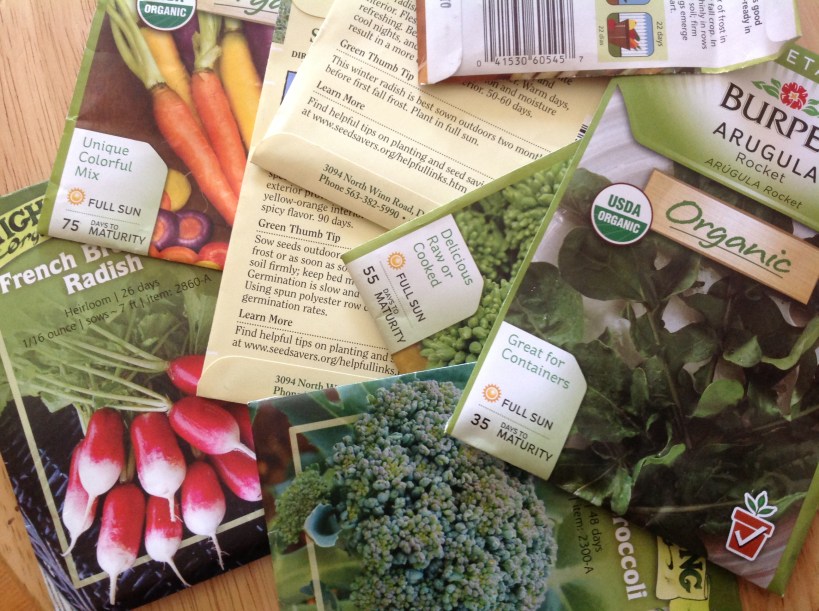
55 Days – 10 Things to Plant Now for Fall Harvest

image

I don’t want to be the one to break the news, but we have about 55 days left until our average first frost hits the Twin Cities.  Now before you get mad at me for mentioning frost, keep in mind that I’m actually trying to give you good news.  That means it’s time to do some succession planting!

“What’s that?” you say.  That is where you take places in your garden where you once had lettuce or radishes or peas… and now have holes and fill those holes with plants that will mature and be harvest-able in the 55 or so days.  You’re looking for plants that prefer warmer soil temperatures for germination, but will also do well when they mature when the days are shorter and nights are cooler.  Think fast growing warm season crops or longer growing cool season crops.  You want the warm season crops to be wrapping up (beans, beets, etc.) and cool season crops to be beginning to peak, because cool season crops actually grow and taste better with a little cold snap (it brings the natural sugars out).

Below, I’ve listed plants that could be planted now for fall harvest and some that should wait a couple of weeks.  You’ll notice I have some duplicates under different time frames.  Why do I have radishes at 20 Days and at 50 days?  Well, it depends on the radish.  Check your seed packets for the “Days to Maturity” section, this number will tell you how many days it should take (on average) for your plant to go from seed to harvest.  Also check for “Planting Tips”, “Green Thumb Tips”, etc.  A lot of times they will provide the information you need on when to plant right on the seed packet.  Take the French Breakfast Radish, for example, (which has 26 days to maturity) the packet notes that it germinates best when the soil temperature is 80 degrees, which is where our soil temperature in the Twin Cities is right now.  Other packets will say “Best grown in cool weather.” Or “Warm days, cool nights.” All of these are flags telling us the best time to plant for optimal harvest.  The trick is really to read the packet, determine what conditions they grow best in and then check the days to maturity to see if we have enough time to grow it.

Examples in order of days to maturity, meaning if you can’t get them all in the ground today, start planting those with the most days to maturity first, followed by those with the least days to maturity.  You can also do a series of plantings with faster growing crops like radishes and arugula, then you’ll be able to harvest some about 3 weeks from now and some about 6 weeks from now, or plant a little each week for harvest 3, 4, 5 and 6 weeks out.

If you were to plant all of these today, you would have something to harvest every week starting 3 weeks from now, through fall.

20 Days: Beet Greens, Radishes

35 Days: Arugula

45 Days: Lettuce, Beets, Spinach, Broccoli Raab, Peas

50 Days: Beets, Beans, Red Malabar Spinach, Carrots, Radishes, Broccoli, Pickling Cucumbers

55 Days: Golden Beets, Broccoli Raab, Beans

55+ Days: Carrots

One more thing to keep in mind is that the average first frost is not necessarily the end of the gardening season (many crops will do well in cool weather) it’s just another tool to use to help us grow as much as we can in our gardens.

So, while the days are still warm and we still have nearly 2 months of summer weather, grab your seeds, get out there and fill those holes!

Happy succession planting!

Kate
July 21, 2013

Dismembered

As I was doing my daily walk through in the garden today, checking for ripe or ripening fruits and veggies, signs of insects, and the need for water, I noticed some wilted squash vines.

My stomach fell. I kept looking, scanning all of the squash vines trying to figure out how many got hit. I was certain it was squash vine borer. Upon closer inspection of the longest wilting vine, I lifted part of it to start looking for the point of entry and found that the vine was completely disconnected from the rest of the plant. Somehow it had gotten broken off. I thought it was odd, but then remembered that we got rain this morning, maybe the storm was stronger than I thought. As I walked around I continued to find more wilted vines. I switched my thought process. It looked like they were cut. All of them were on the street side so I started thinking it was a person who did it. A garden hater. A squash hater. Maybe they don’t like the vines trailing into the yard. Stupid garden haters.

It took my husband pointing out that it seemed a little odd that someone would just cut watermelon. He suggested that it seemed a little too specific. Watermelon haters! Okay, really? Even I couldn’t believe that. I continued scanning the dismembered vines and realized that whoever did this was definitely after the watermelon. They went under, over and in between other squash vines to get to them, cut them off and leave them for dead. At this point I was wishing it had been squash vine borer damage. At least I would have been able to do a little surgery to the vine and get it on its way to recovery. But not this. Cut and done. I found only a couple of vines untouched: those riding along the top of the straw bales. Based on the way they were cut, I’m thinking rabbits did the damage.

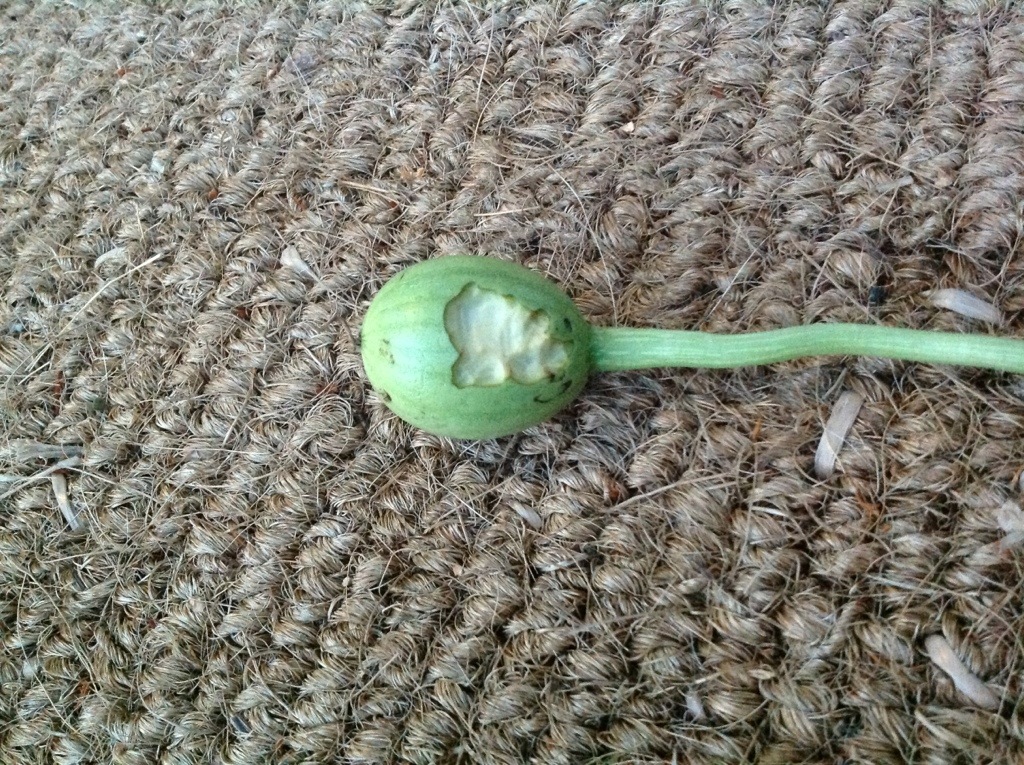
That and the fact that they left this.

20130721-215605.jpg

When I found this teeny weenie watermelon with bites out of it, I was ticked. A deer would have eaten the whole thing, even if it were not sweet.

A friend asked tonight if I swear at the rabbits. My response?
“You mean calling them little effers and telling them to stay the hell away from my plants if they know what’s good for them and they better watch their backs because I’m totally sending the dogs out to kill them? Nope. I don’t”

So I guess my time was coming, being so bold as to plant in my front yard, but after I finished up cleaning up the dismembered vines and balling in them up in a fury that my arms are still paying for, I sprinkled a little more deer and rabbit deterrent around the perimeter and said a little prayer that it keeps them at bay.

20130721-220719.jpg

That and I plan on swiping my son’s night vision binoculars and parking myself in a chair with a sling shot.

Until next time,
Kate