February 4, 2014

Following Pebbles

Image

At one point in time, a friend of mine told me I’ve made more life and career direction changes than anyone she knows. 

Fourteen years ago I left a job I hated where I had friends I loved and went back to school for landscaping.  I graduated from that program a couple of years later and had been in the landscape industry ever since.  A few years ago, landscaping started losing it’s luster.  I still love the industry and have made some incredible friends who I love dearly and hold close to my heart but something changed inside me, I needed something more, so I left the job I’d been at for about 8 years.

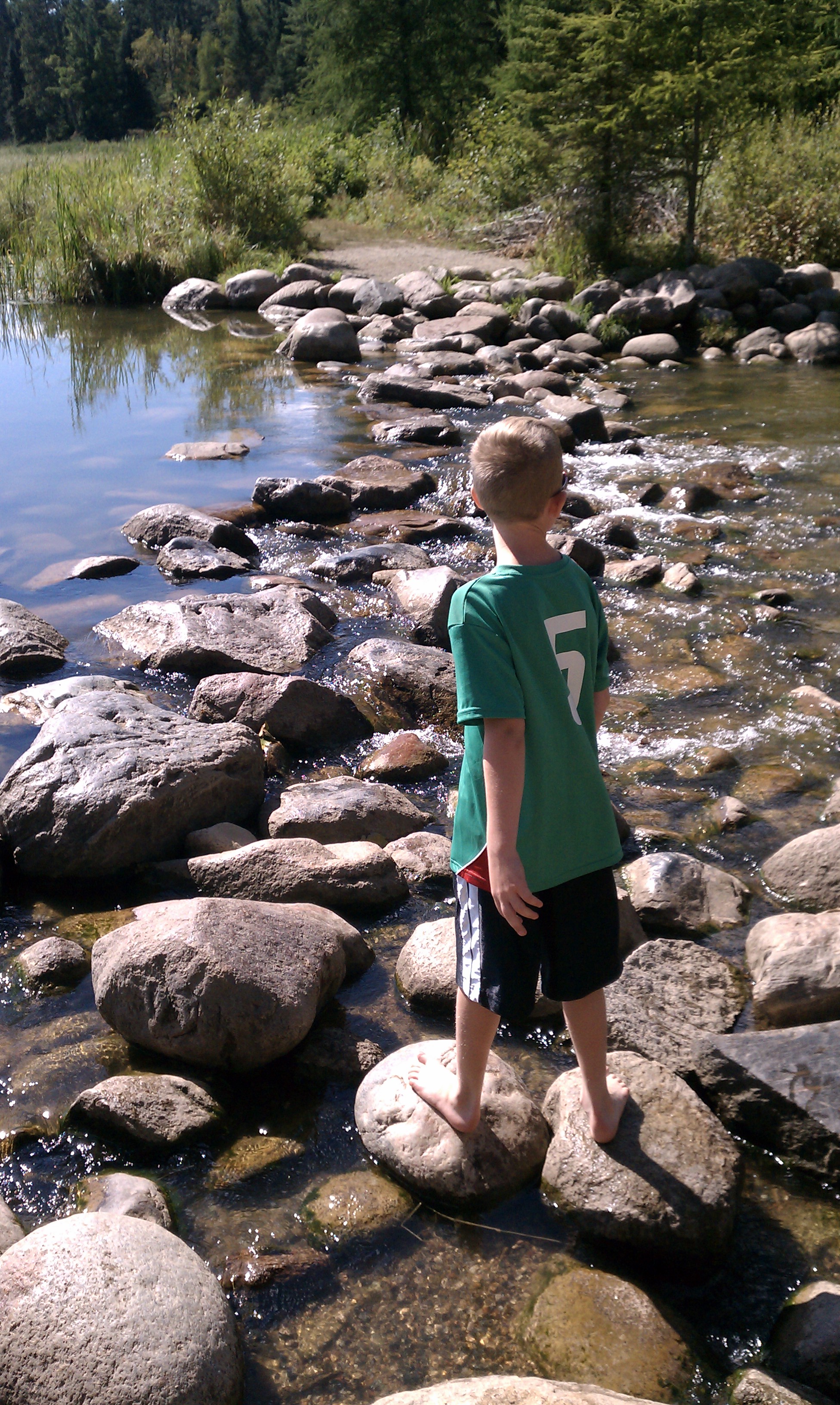
When people would ask “What’s next?” I would tell them what I was up to at the time, but usually follow it with, “I’m just following pebbles. I’m not sure where they are going to lead.”  I’m a firm believer in that if we put out to the universe (or God or whomever) what we are looking for, that we will be given signs as to what we need to do, which direction we need to go and the opportunities will come to us. But it’s up to us to notice them, to trust in them and to choose whether or not to follow them.  Those are my pebbles.

When I left the landscape job I had been at for years, I was presented with an opportunity to switch into a completely different industry and use a foreign language that I had studied in college.  I followed that pebble, but I only stayed a year because as much as I liked the people I was working with, and enjoyed speaking the language a little again, it just didn’t feel like the place I was meant to be.  So I moved on, or back, you might say.

I went back into landscaping, this time focusing my efforts on edible landscaping and edible gardens.  Using land for something useful, pretty and also providing food felt like a better fit, but I wanted to learn more.  I felt like I had gaps in my knowledge and to be able to really help my clientele, I felt like I needed to fill in the gaps.

That’s when I found the Urban Farming Certification Program.  It was another pebble and I followed it.  I ventured into Permaculture wholeheartedly while converting a large portion of our front yard into a food garden, including both annual vegetables and fruit as well as perennial fruits and pollinator plants. Another good fit.  I loved the program, I still love the conversion of our yard, I love growing food and I love sharing with others how easy it is to do the same.  But it doesn’t feel like enough.

For as long as I can remember, even back to my childhood, my parents were focused on health, healthy eating, being active, wellness and personal growth.  These seeds of health and wellness that they planted in my mind have germinated, grown within me and guided me along the path of my life.  Which brings me to the present.

Over the past year, while growing food and wanting so badly to share it with anyone who would take it, I’ve been watching friends, neighbors and family members suffer through the pains of Cancer, weight problems and other health problems.  Each time I learned of something happening all I could think was, “It doesn’t have to be this way.”

I’m, what you might say, a junkie for health and wellness information.  I read, watch documentaries, read more, go to seminars, take classes, listen to podcasts, follow blogs… and I’ve found that the more I learn about health and wellness, about growing food and about the environment, the more all of these pieces seem connected and this is why, I believe, deep down, that food is the core of what harms us but that it is also the core of what can heal us.

This interest in understanding food sparked a long time ago and has slowly been burning, ever greater, until, finally, over the past couple of weeks it has turned into a blazing fire, a deep yearning to learn even more about it so that I can help help others, because I truly believe in my heart that we don’t have to live this way; we don’t have to watch friends and family endure pain and suffering.  I think that we have everything we need to be healthy if we just learn where to look and how to use what is given to us. 

My goal going forward is not only be able to help people learn how to grow their own food, but also to help guide them in living a long, healthy, happy life.

This morning I registered for a year-long program to become a Certified Health Coach so I can do just that and I couldn’t be happier or more excited! So here I am, following yet another pebble.  And from where I stand right now, that pebble feels more solid than anything I’ve ever done in my life.

So, my dear friend, here we go again!

Here’s to chasing pebbles, following your passion and living fully.

Be well.

Kate

February 3, 2014

Environmindful Monday Tip #13: Wash Your Hands of Antibacterial Soap

20140203-234721.jpg

Everyday we get up, we fight a battle.  Our enemies surround us, yet we can’t see them.
We’re told that they are there. We’re told they will get us when we’re down. We’re told they can make us sick… or worse.
How on Earth are we supposed to fight an enemy we can’t see? “Use this!” they say. So we do. And we use and we use, but since we can’t see the enemy to begin with we don’t really know if it’s working or not.
Years go by and we come to find out that the weapons they gave us to kill our enemies didn’t kill them after all. It killed some, but not all. The ones we left behind got more and more powerful, so strong they now have super strength, because you know what they say, “What doesn’t kill you makes you stronger. ”
What’s worse, is the weapons we chose, instead of killing them, are killing us.
This could be the plot of any science fiction movie, but instead it’s the state of what we have done in our battle against bacteria.
Triclosan, the word might not roll off your tongue, but trust me, you know what it does, or shall I say, what it was supposed to do. Triclosan is the chemical in antibacterial soaps, dish soaps, and yes, even toothpaste. And Triclosan is the weapon we chose to fight bacteria.   It’s time to lay that weapon down. It’s not working and studies are finding that it’s doing more harm than good.
I know, it seems scary at first, to let go of that antibacterial soap we’ve become so accustomed to using. It feels like you’re saying,  “Hey, Bacteria! Yeah,  you, look here, I put my weapons down. I’m defenseless!” but the reality is, we’re not.
By choosing not to use products labeled antibacterial,  we are choosing to take our lives back. We are choosing to take the super powers away from the bacteria and leave them simply as bacteria. And when we choose not to buy antibacterial products with Triclosan,  we are choosing to take our lives back from Cancer, from infertility and from many other diseases that sound way worse than bacteria if you ask me.
So the tip for the week?
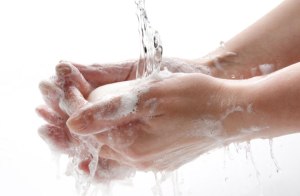
Environmindful Monday Tip #13: Wash Your Hands of Antibacterial Soap and go back to regular soap and water. Wash your hands. Wash them well, for at least 20 – 30 seconds, scrubbing the germs off and then rinse them down the drain. When you’re done, wipe your hands on a towel to grab any stragglers that may have gotten missed.
The simple act of washing our hands is just as effective as Triclosan and way less detrimental to our health.

Be healthy,  be safe,  be well.
Kate

January 28, 2014

Environmindful Monday Tip #12 – Recycling Is Not An Option

Recycle

When did you first become aware of recycling, do you recall?  My first memory was in high school, Freshman year, or maybe slightly before, but in the mid-1980s.  Why do I remember this?  Because we got a can crusher!

I remember thinking that was the coolest thing ever.  At fifteen, most things were cool… unless of course they weren’t.  Anyway, my dad hung the can crusher just outside the door from the house to the garage in our new house.  I loved that thing!  I couldn’t wait for someone to empty a can of pop (soda for those of you who don’t live in Minnesota) or beer.  I would grab the can, set it on the little shelf, pull down the lever (which doubled as a handle) and C-R-U-N-C-H!  Ooo… the power I felt crushing cans was awesome!  When I was done I’d take my little disc of metal and toss it in the bag below the crusher.  I would repeat.  Set, C-R-U-S-H, ting…  set, C-R-U-S-H, ting… Yeah!

Can crushers made recycling fun.  That’s right.  I thought recycling was fun!  Then can crushers went away.  “They” said we didn’t need them any more and in fact didn’t even want us crushing the cans.  Bummer.  Somehow tossing them in a paper bag didn’t have the same effect as smashing them down to bits, but, whatever.  I continued sorting the cans.  Then the bottles.  They had to be sorted by color of glass: a bag for clear glass, a bag for brown glass, a bag for green glass. Oh, and newspaper.  A bag for that too.  I have a self-diagnosed split personality (not like Jekyll and Hyde… although maybe my family disagrees) no, I have my über organized side and my über, shall we say, “creative” side.  My über organized side LOVED sorting and organizing the recycling.  Seriously.  I took this on as a very serious task when I was a teen.  I’m not sure what it was at that point in time that made me realize that recycling was important, but I did.

And I still do.  Today, however, my focus is different, most likely because I have a child and I want the absolute best for him (or at least as best as I can offer).  These days I am a little less obsessed in the organizing the recycling mentality and way more obsessed in the “we gotta do this” mentality.  Recycling has been on my mind a lot lately, and by lately, I’d say at least the last year.  Okay, in reality it’s probably one of those thoughts that are always swirling around in the back of my mind, but in the past year it’s been demanding a little more attention than it has in the past.

Remember a few of months ago when I started this Environmindful Monday post?  I was pretty torqued about the report I heard about the amount of trash that we are producing in Minnesota.  After thinking it over for a while, I realized that part of what made me so upset was the volume of material going to the trash heaps that could be recycled.  It got me thinking and questioning why people aren’t recycling?  Yes, I realize you probably think I’m crazy, but this is indeed the stuff I spend a lot of time thinking about when I’m not focused on the current task at hand.

I was questioning accessibility.  Are there designated places for people to put their recycling when out and about?  Although they aren’t in every location yet, in general, I would say that even if you have to look a little bit, most places have a recycling bin.  So that’s not it.  Are people just lazy?  I think sometimes yes, sometimes no.  Don’t people understand the impact?  Have they not been educated on the importance of recycling?  I’d have to say that for most, you’d have to have been living under a rock for the past 30-plus years to literally not “know” about recycling.  Even my nine-year-old son can be found singing “Re-cycle, re-cycle, recycle now… da, da, da…”

So what is it?  Here is the conclusion I came to.  Over the holidays, and even into January, I attended a number of parties varying in size, age of attendants and formality of the event.  What I observed at these events, and in general, is that the mindset of the majority of people who I observed is that recycling is “optional”.  Are you following me?  People think that recycling is a choice like should I buy Coke or should I buy Pepsi?  Do I feel like making my can garbage today or recycling it?  The mindset of the general public, and yes, I’m generalizing, is that recycling is an option.  There isn’t a law saying that we have to recycle.  So we do when we feel like it and don’t when we don’t feel like it.  We also, when given a situation where there isn’t a recycling can next to a garbage can, will throw a plastic bottle or can into the trash, letting ourselves off the hook with the thought of “I didn’t have an option, there wasn’t a recycling can”.  Another example: I was at a party in someone’s home recently and when I asked if they had recycling somewhere they giggled and said, “No… I’m being bad.  I don’t have one today.”  As much as it bothered me that A) they didn’t have recycling and B) they were aware that they should, I didn’t want to insult or offend them so I didn’t say anything… and proceeded to throw my can in the garbage.

In a different circle, I never would have done that.  Had I known them better, I would have said something, but that, I believe, is our problem.  We aren’t in a place where recycling is mandatory.  We are still living with the mindset that recycling is optional and that it’s not our place to tell another person what to do.  If it were mandatory or not optional in everyone’s mind, that situation would have been different.  They either would have had recycling to begin with, or because it isn’t considered optional, the conversation would be easier to approach.

So how do we change this?  That’s what my mind will be mulling over and tossing around for the next, who-knows-how-long.  Until we all decide that recycling is important, that it’s a necessity, and not an option, things aren’t going to change.  But it needs to change because there really aren’t any reasonable excuses any more.  We wouldn’t go to a party and ask where to throw the trash and have someone laugh and say, “Oh, I’m being bad today.  I don’t have a garbage.” That’s not an option.  Neither is recycling.

The difference is, our trash, doesn’t create jobs.  Okay, yes, it creates a few jobs for those who haul it and move it and dig holes for it and try bury it and those who do toxic soil remediation.  But our recycling?  Many businesses and products are based on reusing glass, plastics and paper, and by choosing not to recycle, we are choosing not to support our economy and that just doesn’t make sense (or cents).

Whether you care about the environment, the Earth, the water we drink, the air we breathe and the soil we grow our food in or you care about the economy, both local and global, take that and make it your reason to care about recycling.  Pass that on.  Share it.  Educate people.  Talk about it. And recycle.  Always.  Let’s make recycling mandatory.  Because it is.

Be mindful.  And remember, no waste = more green space!

Kate

Tags:
January 20, 2014

Environmindful Monday Tips #9, #10 and #11

As parents, we are always trying to keep our children healthy and safe and for years, flame retardants have been applied to children’s clothing to protect them in case of a fire, but those same flame retardants may be causing more harm than good.

Polybrominated diphenyl ethers (PBDEs), also know as flame retardants, are found in many areas in our homes, particularly in electronics such as cell phones, TVs, computers, video game consoles, laptops and media players, not to mention furniture, clothing and in most children’s pajamas.

Although PBDEs are meant to protect us and even prevent fires, PBDEs have now been linked to cancer, reproductive problems and found to lower IQs in children.

Environmindful Monday Tip #9

  • Avoid flame retardants in clothing and pajamas.  The EWG found that PBDEs are showing up in women’s breast milk. and they found that children have 3x more PBDEs than their mother. Children ingest more PBDEs because the substances stick to their hands and other things they put in their mouths.
  • Opt for organic* cotton or wool clothing and pajamas instead of polyester and other manufactured fibers treated with PBDEs
  • *Conventional cotton is typically grown using pesticides.  Since organic crops cannot be grown using pesticides, by buying organic cotton clothing you will ensure that you are not exposing yourself or children to pesticides which would be in direct contact with the skin.

Environmindful Monday Tip #10

dusting

  • Dust, vacuum and mop regularly to reduce dust in homes.  When electronics heat up the PBDEs release and settle into dust in your home. Chemicals are breathed in and picked-up from the carpet, furniture, floor, on toys and on toddler’s hands.  By dusting, vacuuming and mopping floors on a regular basis you will reduce expose to PBDEs.

Environmindful Monday Tip #11

hand-washing

  • Wash your hands regularly, especially before eating. We often hear that we should wash our hands to prevent the spread of disease, viruses and bacteria, but it is equally important to wash hands prior to eating to  remove the PBDEs from your hands so you do not ingest them, especially after using electronics.

For more information go to the Environmental Working Group Reducing your exposure to PBDEs in your home and Children’s Health and Polybrominated Diphenyl Ether (PBDE)

Be. Mindful.

Kate